

Model Rocket Fin Alignment: Marking, Jigs and Inspection
Fin alignment means placing each fin where the kit plan intends, with a secure root joint. A jig or marking guide can help with repeatability, but appearance alone cannot establish flight safety. Fin placement can affect aerodynamic behavior; observed spin, weathercocking, or instability may have more than one cause.
Mark and attach the fins
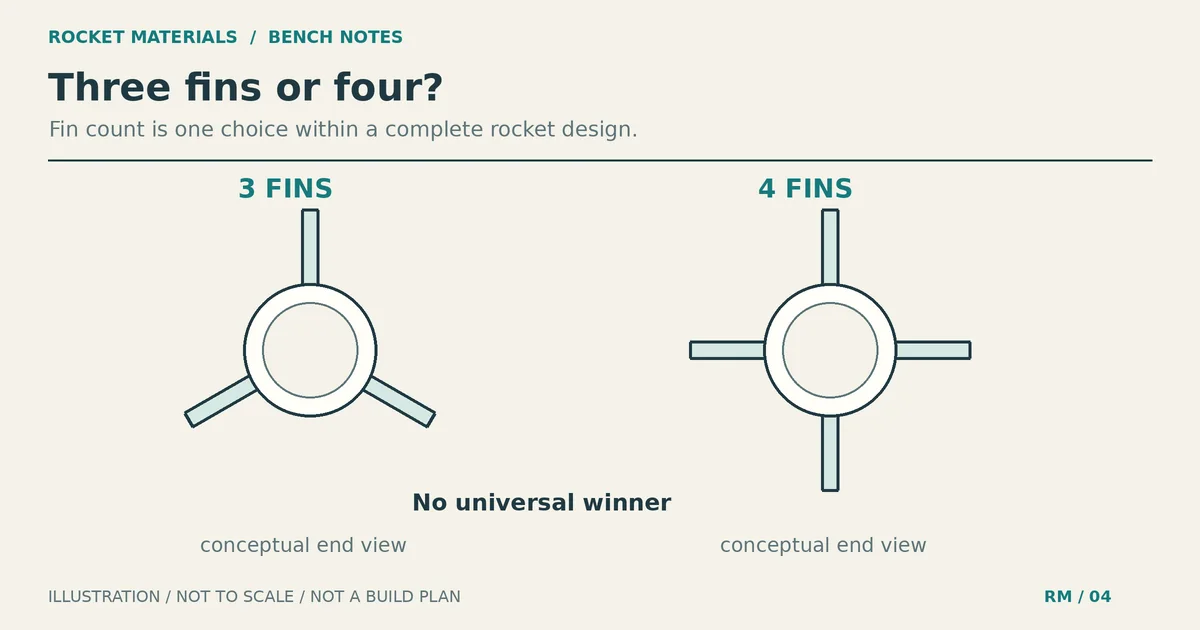
- For a kit, follow its fin layout, attachment method and stage instructions. For a custom design with straight, equally spaced fins, make a body-tube marking guide matched to the actual fin count and mark each line parallel to the tube axis.
- Dry-fit the fins and check their positions from the aft end and along the tube. Look for twist, skew and inconsistent spacing relative to the intended layout.
- Attach with an adhesive compatible with the fin and tube materials. Hold each fin in the planned position for the adhesive maker’s specified set and cure schedule; then inspect the joints.
A ruler and a flat work surface may be enough for a simple build. An optional Estes Fin Alignment Guide is listed for certain body-tube and fin configurations, including three- or four-fin builds; check the current product listing for supported sizes and price before buying. A jig helps position parts, not certify the assembly.
Before deciding to fly
If a fin is loose, visibly misplaced relative to the design or damaged, correct the assembly and reassess the rocket. No generic fin-angle tolerance can determine whether a rocket is stable. The NAR Model Rocket Safety Code calls for a stability check when the safety or stability of an untested rocket is uncertain. For high-power rockets, the NAR High Power Rocket Safety Code requires checking stability before flight.
Intentional fin cant changes drag and spin; use a proven plan or assess the specific design rather than copying a universal angle. For multistage kits, follow stage-alignment and separation instructions instead of assuming that fin positions between stages must match.


2 Comments
Comments are closed.