
How to attach a parachute to a model rocket securely
Learn how to attach a parachute to a model rocket using shroud loops, an approved swivel and eyelet checks. Inspect the connection and clearance before flight.
Parachutes, shock cords, wadding, and recovery materials
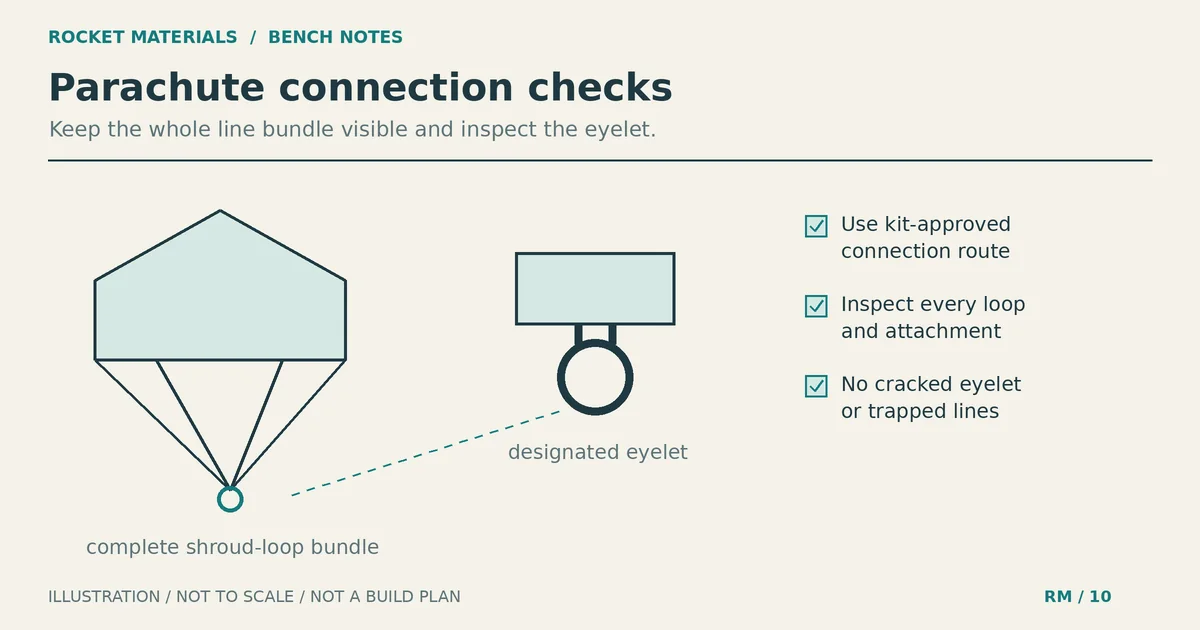
Learn how to attach a parachute to a model rocket using shroud loops, an approved swivel and eyelet checks. Inspect the connection and clearance before flight.
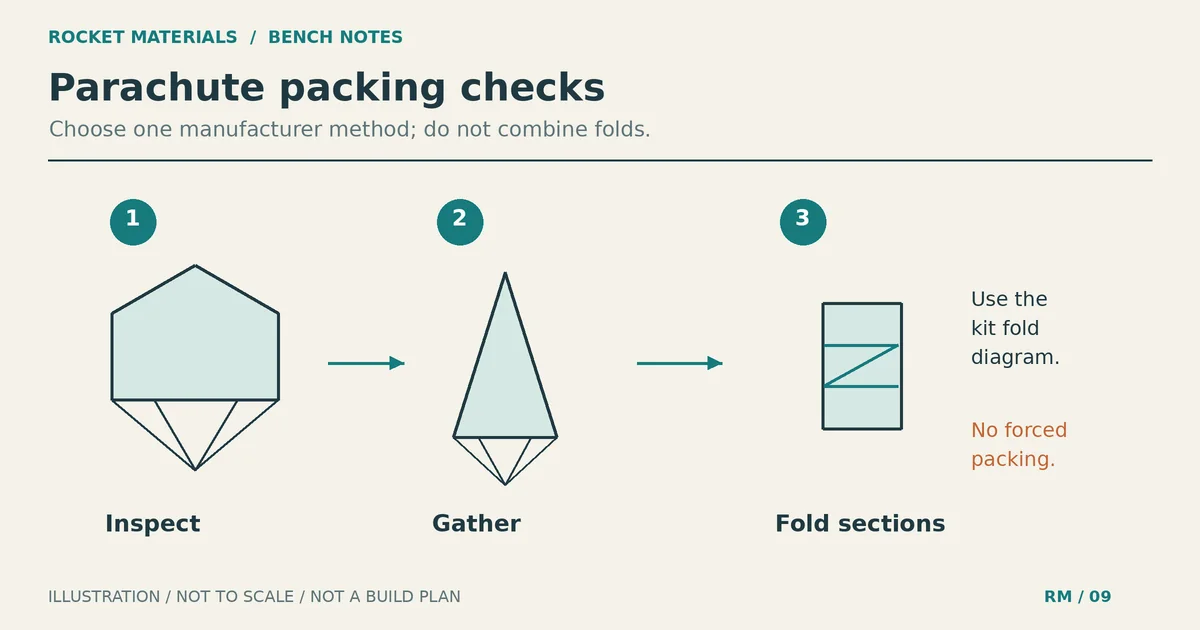
Learn how to fold a model rocket parachute with manufacturer packing methods, untangled shroud lines, recovery protection and a careful unpowered fit check.

Compare specific plastic-film and nylon parachutes by construction, fit, and manufacturer recovery data—not by an unsupported material-only descent ranking.

Neither polyethylene film nor nylon fabric guarantees a slower descent. Compare the exact canopy, packed fit, attachment and recovery mass for your rocket.

Choose a shock cord and anchor for the specific kit and airframe. Inspect attachments before every flight; do not drill thin body tubes for generic eye-bolt mounts.

Estimate parachute performance using the actual rocket mass, canopy data, deployment and field conditions. No diameter formula or wind adjustment guarantees a safe landing.
Place flame-resistant recovery wadding between the motor and parachute or streamer. Follow the kit’s quantity and packing instructions; avoid gaps and obstructive plugs.

Streamer suitability depends on rocket mass, dimensions, deployment, and landing site—not material name alone. No controlled material-life test is claimed.