
Parachute Fabric Comparison: Plastic Film & Nylon Ripstop
Model-rocket parachutes are sold in different films and fabrics. An Estes printed parachute is identified as LDPE plastic film; another Estes product uses ripstop nylon. “Ripstop” describes a reinforcement weave, not a third polymer category separate from nylon. Mylar is polyester film, not a synonym for polyethylene; check the actual product material.
Use this overview to read parachute material labels and construction terms. If you already have two replacement canopies in mind, use the replacement-parachute comparison checklist to compare their manufacturer data and fit in the same rocket.
Compare canopies, not labels alone
Canopy geometry, deployed area, venting, porosity, shroud lines, inflation and recovery mass all affect descent. NASA’s drag model and manufacturer guidance on canopy dimensions show why neither plastic film nor nylon is always the slower option. There is no trustworthy material-only speed, life-span or pack-volume table for all products.
Read the material label before comparing specifications
| Listing term | What it identifies | What it does not establish |
|---|---|---|
| LDPE plastic film | The material Estes names for its 18-inch printed parachute. | A universal film weight, service life or descent speed. |
| Nylon ripstop | Nylon fabric with a reinforcing weave; Estes uses it for a separate Rip Stop line. | A third polymer alongside nylon, or a universal pack-size/strength ranking. |
| Mylar | A brand of PET polyester film, not the LDPE in that Estes printed chute. | That every reflective “emergency blanket” has the same composition or recovery suitability. |
For any listing, look for the exact material and construction, canopy shape and dimension convention, shroud lines, attachment details, packed volume if the maker provides it, and a design-specific recovery rating or descent estimate. Compare ratings only at the same recovery mass and under compatible definitions of reference area and drag coefficient. If a homemade plastic canopy is contemplated, Apogee advises checking that the sheet resists tearing in both directions; that check does not certify a completed recovery system.
Whatever material is chosen, follow the kit’s packing instructions and protect it from ejection gases. Our recovery-wadding placement guide covers the barrier; the NAR model-rocket code requires flame-resistant or fireproof recovery wadding. For an actual film-versus-nylon replacement decision, use the two-candidate selection checklist.
Choose for the actual rocket
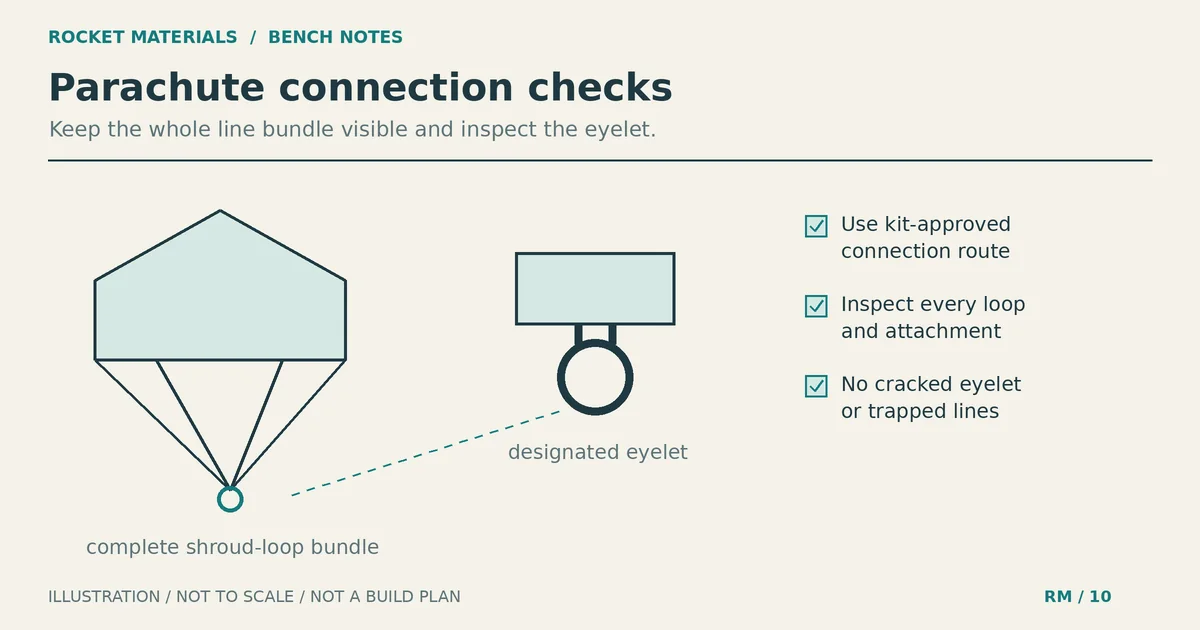
Start with the kit’s supplied system. For a replacement, compare the specific canopy’s intended recovery mass, diameter convention, packed fit, attachment and maker instructions. Apogee discusses plastic and cloth canopy tradeoffs, but a generic fabric label cannot certify landing speed or durability. Check inflation, lines, attachment and heat protection before launch; use flame-resistant or fireproof wadding as required. Do not treat illustrations or product photographs as a site-run comparison test.

3 Comments
Comments are closed.