

Model Rocket Streamers: Materials & Recovery Selection
Streamers can provide visible, compact recovery for suitable lightweight model rockets. They generally create less drag than parachutes, so a streamer is not automatically an adequate landing device for a heavier rocket. Apogee’s streamer discussion explains how width, length, stiffness and attachment affect behavior; a longer strip is not inherently a slower one.
Material and design
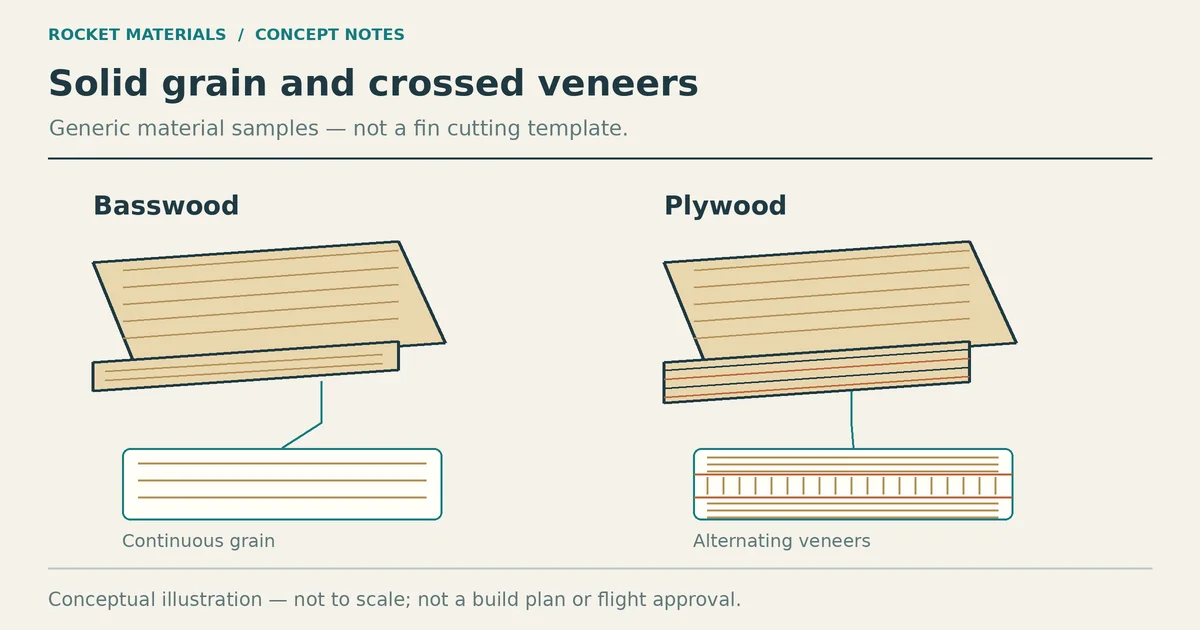
Plastic film, purpose-made streamer stock and paper products differ by exact formulation, thickness, handling and packing. Do not assume that all surveyor’s tape is the same polymer or that every emergency blanket is the same film. Compare the actual strip’s dimensions and attachment with the kit or maker’s guidance. A paper streamer is still a recovery device, not a substitute for the flame-resistant or fireproof ejection barrier required in the model-rocket code.
Check the landing plan
Choose recovery for the actual rocket and field, considering expected deployment altitude, descent and wind drift. Drag-based descent estimates depend on mass, air density and the effective drag of the deployed device; material name or rocket mass alone cannot determine a safe streamer. If a streamer is used as a high-altitude drogue, a separate landing device may be necessary under the design. Larger or high-power rockets need a configuration-specific recovery plan and the applicable high-power safety code.
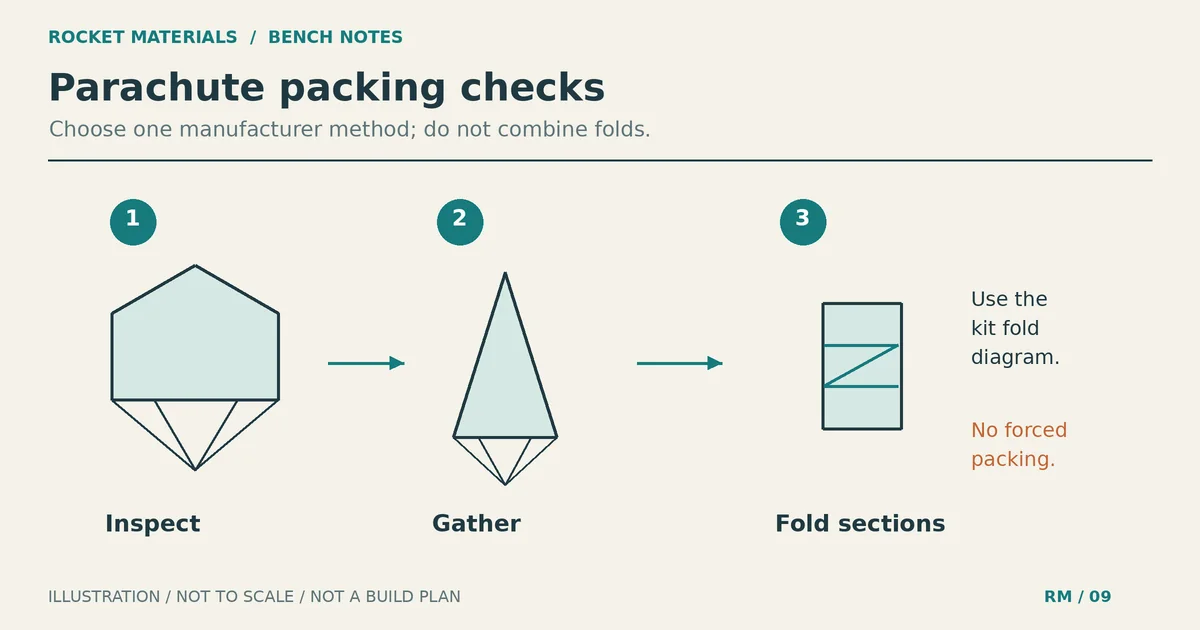
Inspect the tether, heat protection and packing before flight. This article does not report controlled deployment-cycle, material-life, weight, altitude or cluster-performance tests; do not infer numerical durability or performance rankings from it.




One Comment
Comments are closed.