

Phenolic vs Fiberglass Body Tubes: Which Is Better?
Phenolic versus fiberglass is a comparison of particular airframe products, not a division between motor letters. PML’s phenolic catalog describes resin-impregnated, spiral-wrapped, heat-cured tubing and publishes dimensions for named products. A fiberglass tube has its own laminate, wall and component system; neither material label certifies a flight. The NAR high-power code requires a qualified flyer, stability and compliant construction rather than mandating one airframe material.
What to compare
| Question | Phenolic | Fiberglass |
|---|---|---|
| Product information | Check the exact tube’s ID, wall, length, mass and matching parts. | Check the exact laminate’s OD, ID, wall, mass and matching parts. |
| Impact and finishing | Assess the supplier’s reinforcement guidance and likely landing loads. | Assess layup, surface preparation and composite dust control. |
| Motor suitability | No universal motor cutoff: validate the complete rocket. | No universal motor rating: validate the complete rocket. |
A tube’s mass is not the finished rocket’s mass. Include reinforcement, couplers, fins, coatings, adhesive, motor mount and recovery hardware when comparing alternatives. For high-power flight, follow the NAR high-power code, the chosen motor’s instructions and the kit or component makers’ directions. Certification is a flyer/flight requirement, not a prescription to use fiberglass.
A named phenolic example
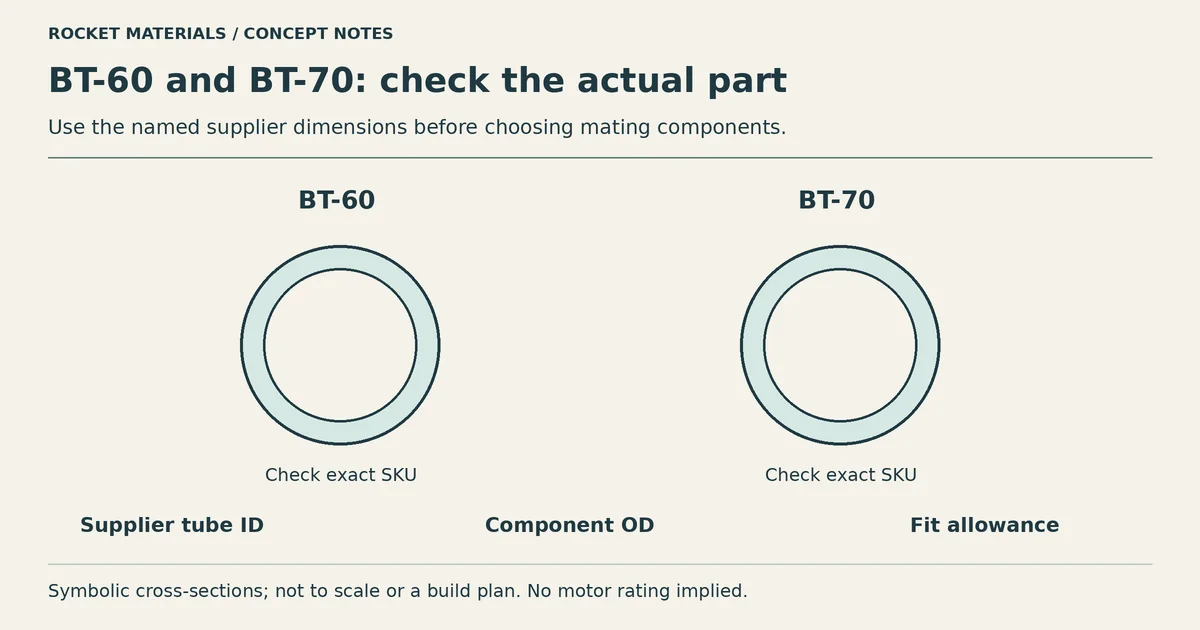
The PML phenolic airframe listing at LOC Precision includes PT-3.9: 3.900-inch inside diameter, 0.062-inch wall, 36-inch length and listed 15.3-ounce tube weight. It also lists larger diameters. These are catalog specifications for that tube, not a general phenolic tolerance or a motor rating. PML describes its phenolic as heat resistant and recommends it for motor-mount and some minimum-diameter applications; assess the actual design instead of extending that recommendation to every phenolic airframe. PML parts are not automatically interchangeable with Estes BT-series components.
Fit, durability and budget
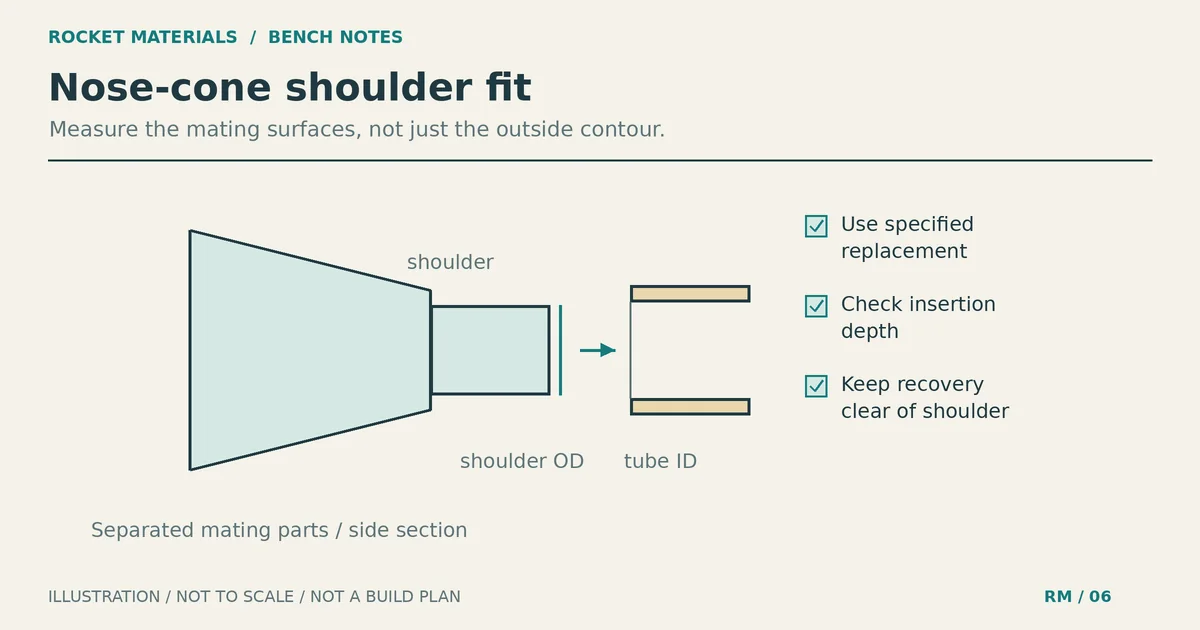
Check the tube ID against a nose-cone shoulder or coupler OD, and the outer surface against any sleeve ID. Confirm the corresponding part series with the supplier and dry-fit before bonding. Consider the intended landing conditions and whether the specified tube or a reinforced configuration meets the project’s loads. Use current product listings for delivered cost; weigh the complete assemblies and simulate the selected motor rather than predicting altitude or lifetime from a material name.
There are other paper-based options, but do not assume their composition or interchangeability. For example, Apogee identifies its 54 mm Blue Tube, model 10502, as high-density paper. That is a separate named product, not a generic phenolic specification.
For a broader paper/composite comparison, see cardboard versus fiberglass body tubes.




One Comment
Comments are closed.