
Recovery Wadding: Placement, Packing & What to Use
Recovery wadding protects a model rocket’s parachute or streamer from the hot ejection gases. The NAR Model Rocket Safety Code calls for flame-resistant or fireproof recovery wadding and a safe, reusable recovery system. Use the kit’s specified protector and follow its instructions.
Put the barrier below the recovery device
- With the motor/ejection end below, place the specified wadding between the motor and the parachute or streamer—never on top of the parachute.
- Loosely crumple and arrange it to cover the body-tube cross-section without edge gaps; do not compress it into a hard plug.
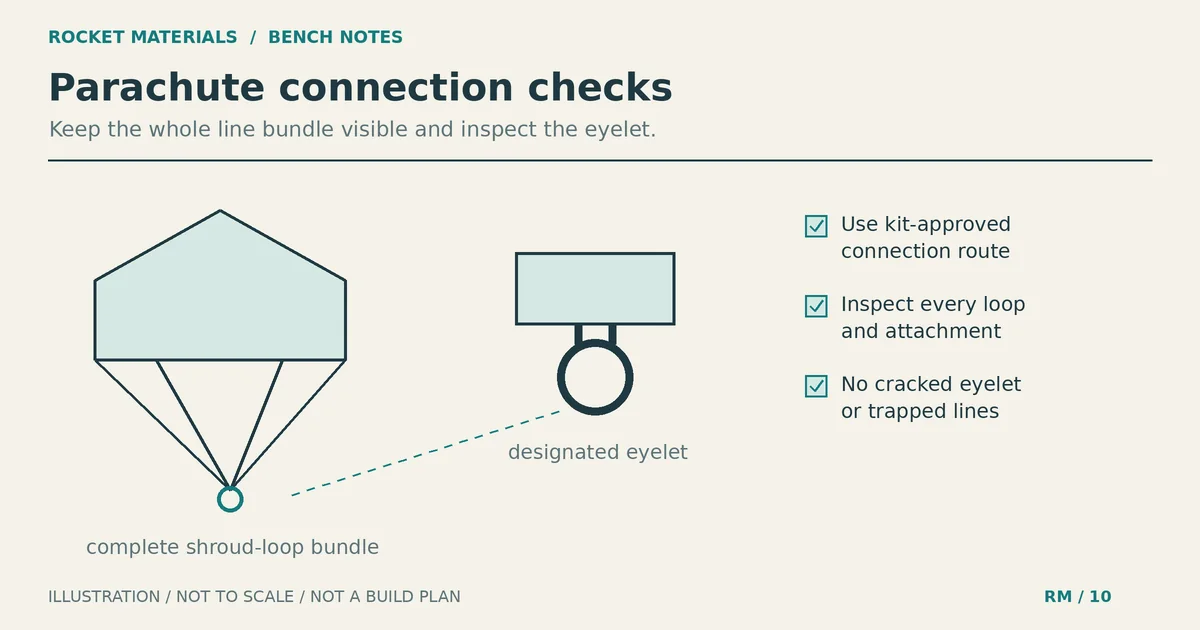
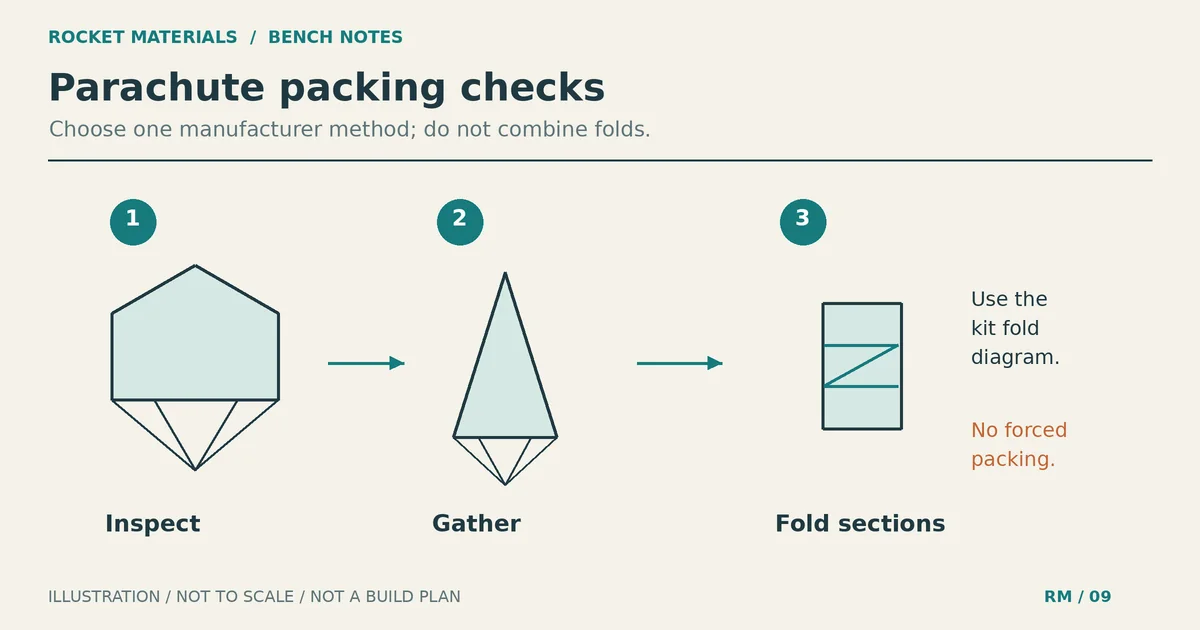
- Then pack the protected recovery device and shock cord as the kit directs. Check that the nose cone fits and can separate without binding.
For parachute packing and fit checks, see our guide to folding a model rocket parachute.
Estes explains the protective purpose and placement. Its wadding instructions describe loose packing, while Apogee cautions against too much wadding because it can interfere with deployment.
How much and what kind?
There is no universal sheet count by tube size or motor letter. Use the amount in the actual kit and product instructions, with coverage but without blocking ejection. If using a reusable protector instead, verify its fit and method against the particular airframe and recovery system. Ordinary household tissue is not a substitute for a specified flame-resistant barrier.
Inspect the parachute, lines, cord and protector before each flight. Recover loose wadding and flight debris where safe and permitted; do not attempt dangerous retrieval. High-power flights have a separate NAR safety code and require configuration-specific recovery planning rather than model-rocket sheet-count rules.




3 Comments
Comments are closed.