
How to Paper Balsa Rocket Fins Without Warping Them
Paper skins can make a balsa fin smoother and more resistant to small handling damage.[1] They are an inexpensive finish and reinforcement method for suitable low-power builds, not a substitute for designing a sound fin, joint, and recovery system. Apogee Components demonstrates a two-sided paper-and-wood-glue method and cautions that the added water can warp the wood.[1]
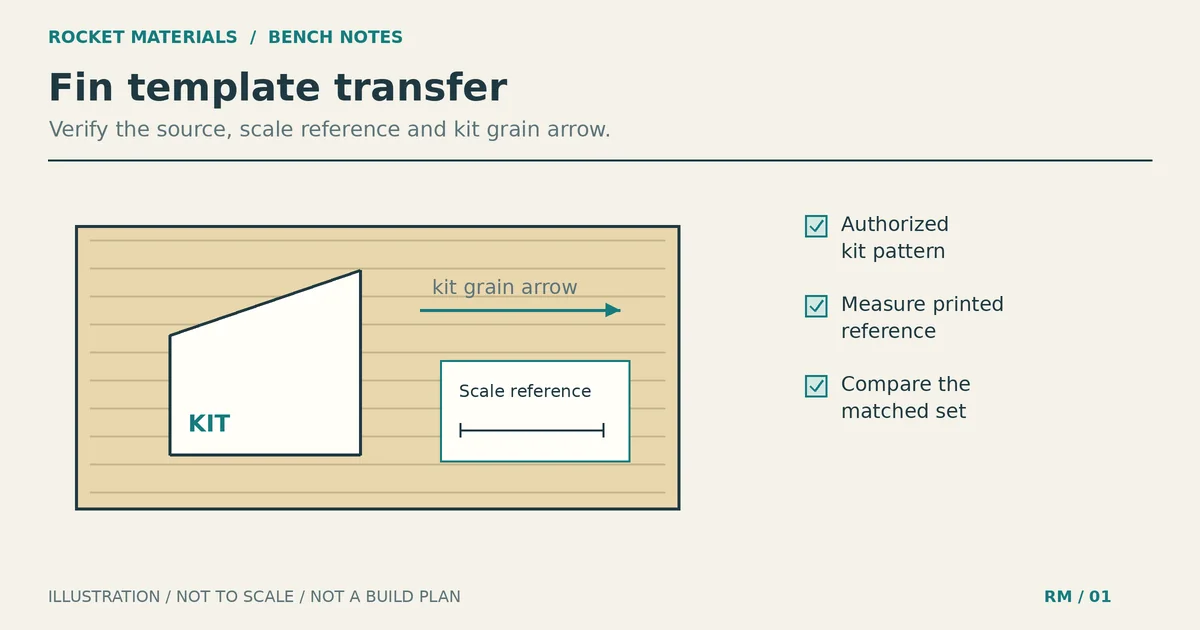
This guide focuses on the lamination step. Cut the wood according to the kit’s fin template and grain marks, where provided; for a custom fin, check the grain direction against its actual shape and loads. Paper will not fix a fin cut from unsuitable stock or a weak attachment.
What you need
- Balsa or basswood fins already cut to the kit’s specified shape
- Plain paper, cut to cover each face without covering the root attachment area
- Ordinary wood glue, a small container, water, and a brush
- A flat work surface, breathable cloth, clean cardboard, and weights for pressing
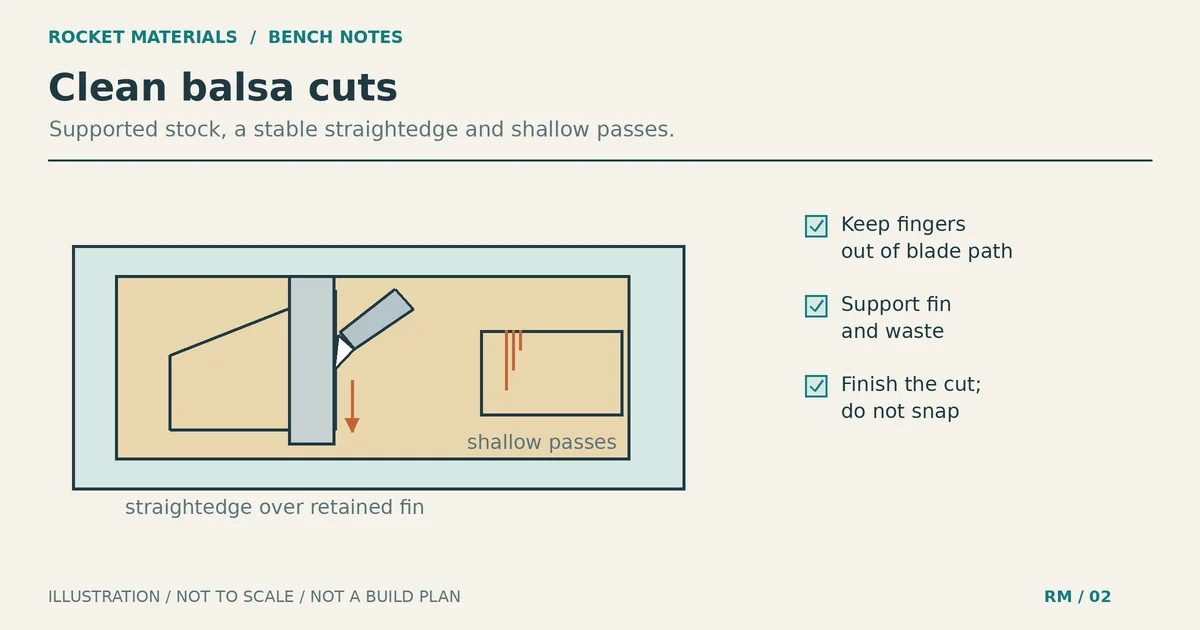
- A sharp hobby knife or scissors for trimming after the paper has dried
Apogee’s demonstration uses plain paper, thinned wood glue, breathable nylon cloth, cardboard, and a weighted press.[1] It suggests roughly two parts water to one part glue as a workable example, not a strength-tested universal ratio.[1] Follow the glue maker’s instructions if they differ.
Paper both sides in the same session
Cut two paper skins to match the fin faces. Test-fit them before opening the glue. Keep the root edge clear where the fin must bond to the body tube or through-the-wall tab; paper over a structural glue joint can change the intended adhesion. Follow the kit’s fin-mount instructions.
Brush a thin, even layer of the prepared glue onto one face and its paper skin.[1] Apply that skin, then turn the fin over and repeat on the other face without waiting for the first side to dry.[1] Apogee emphasizes treating both sides together because moisture applied to only one face can bend the wood as it dries.[1] Wet paper stretches, so position it gently and smooth out bubbles without pulling it apart.[1]
Set the covered fin between breathable nylon and flat cardboard, then weigh the stack down so the surfaces stay flat while moisture escapes.[1] The video specifically uses a breathable layer so the wet paper does not stick to the press and recommends allowing a long, complete drying period.[1] Do not seal the fin under impermeable plastic or start sanding while the glue is still damp.
After drying, lift the fin out and inspect both faces. Trim only the excess paper, working carefully around edges and any tab. Check that the fin remains flat and the root bond area is clean. If a warped fin will not sit flush or a skin peels away, repair or replace it before attaching it to a rocket. A cosmetic paper skin cannot compensate for a poor structural joint.
When paper skins are the wrong fix
Papering is a finishing and modest reinforcement technique. Apogee’s builder notes that paper is cheaper and lighter than a composite layup but does not provide the same strength as fiberglass, Kevlar, or carbon reinforcement.[1] Do not infer a safe motor class, speed, or number of flights from a papered fin. Larger or faster designs need an appropriate structural analysis and build plan rather than a blanket material rule.
The NAR Model Rocket Safety Code calls for lightweight non-metal nose, body, and fin parts and for checking the stability of an untested rocket before flight.[2] It does not certify a papering technique as a substitute for a stable design. Follow the kit and motor instructions, inspect the joints before launch, and use an appropriate recovery system.[2]
If the fin itself is sound but the kit has alignment problems, follow its alignment marks and instructions or use an appropriate jig. For other strengthening options, consult the kit or component instructions and check the entire design. Papering is not a universal remedy for a weak fin or joint.
Sources
[1] https://www.apogeerockets.com/Advanced_Construction_videos/Rocketry_Video_450
[2] https://www.nar.org/ModelRocketSafetyCode