

Model Rocket Parachute Sizing: Descent & Drift
A parachute must deploy reliably, limit landing energy and keep the rocket within a safe recovery area. A diameter alone cannot establish touchdown speed. Start with the kit’s supplied recovery system or a manufacturer-approved replacement for the actual rocket.
Estimate, then check the design
NASA’s drag-based descent model depends on recovery weight, air density, deployed reference area and a drag coefficient defined for that area. These inputs—and whether the canopy fully inflates—matter. Fruity Chutes explains why canopy/reference diameter conventions must match the manufacturer’s data. Use design-specific information and consistent units rather than a universal diameter multiplier or an unsourced descent-rate chart.
Wind is a drift decision, not an enlargement rule
A larger canopy can increase time aloft and drift. Consider deployment altitude, wind aloft, field boundaries and hazards; postpone when recovery inside the permitted area is unlikely. The NAR model code’s wind ceiling is a limit, not an endorsement to fly in poor conditions. Do not automatically increase parachute size as wind rises.
Before launch
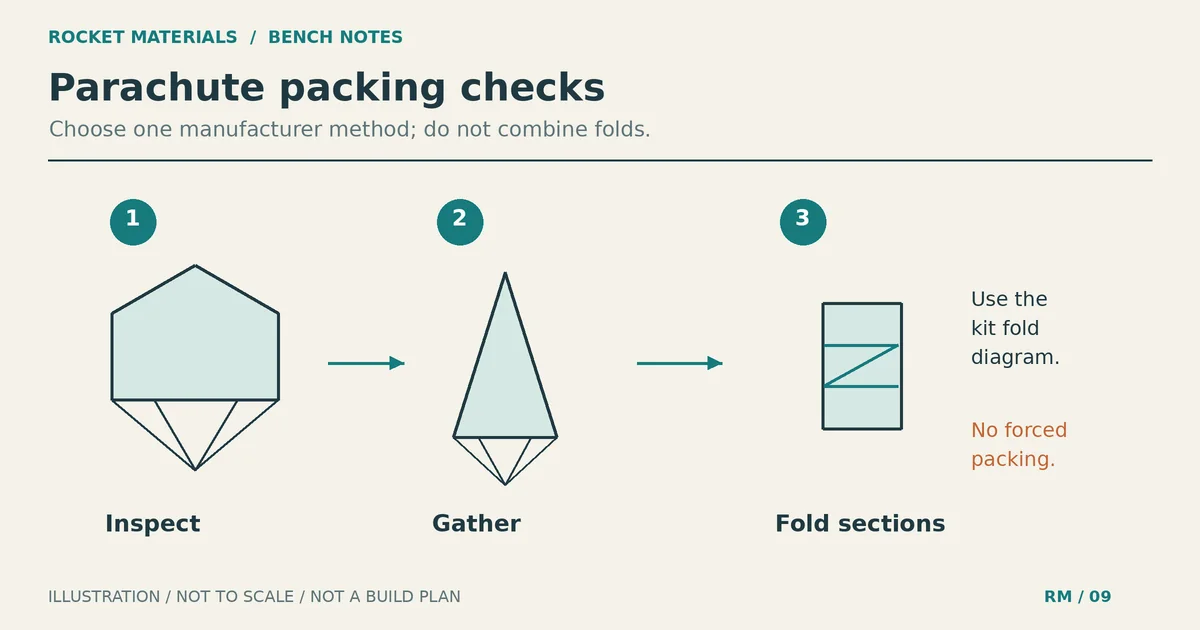
Verify the actual recovery mass, approved motor and delay, canopy condition, line attachment, packing, wadding and free nose-cone separation against the kit instructions. A short hand-drop can reveal a tangle, but it cannot validate ejection or sustained flight descent. If descent appears too fast, inspect inflation and the design-specific canopy recommendation; a spill hole can reduce drag and is not a generic cure. For high-power applications, follow the separate high-power code and the applicable flight review.





One Comment
Comments are closed.