
Plywood vs balsa model rocket fins: how to choose
Balsa is easy to cut and keeps a small rocket light. Plywood has cross-laminated layers that make it less dependent on one grain direction, but the extra material can add weight. Neither label tells you whether a particular fin will survive a flight. The outline, thickness, sheet quality, joint and expected speed matter too.[2][3][6]
If you’re building from a kit, use its specified fin stock and instructions. If you’re replacing a damaged fin or drawing a scratch-build, start with the trade-offs below and verify the whole design before flying.
Plywood vs balsa fins at a glance
| Question | Balsa sheet | Plywood sheet |
|---|---|---|
| How is it built? | Solid wood with a distinct grain direction | Thin veneers bonded with alternating grain directions |
| What is the weight trade-off? | Usually the lighter option for comparable fin blanks; sheet density varies | Often heavier for a similar outline and thickness; weigh the actual stock |
| How do you cut it? | A sharp hobby knife works for many sheet thicknesses | Often needs a suitable saw or machine cutter; tool choice depends on thickness |
| What needs attention? | Grain orientation, dents and splitting | Ply quality, possible delamination, and the weight added at the tail |
| When might you choose it? | A kit specifies it, or a lightweight hand-cut design benefits from it | A design calls for cross-grain resistance or more robust stock, and the weight and joints have been checked |
Balsa’s low density and easy workability are documented properties, but one species average is not a mass specification for your sheet. Plywood properties likewise depend on construction, thickness and stress direction. The table is a selection aid, not a strength rating or a flight clearance.[1][2][3]
What the wood changes
Balsa: light and easy to shape
Balsa is a straight-grained wood that cuts and sands easily. The Wood Database reports substantial variation in its density and mechanical properties, so don’t turn a generic “contest” or “A-grain” label into a fixed weight or strength grade. Grain cut describes the way the sheet was sawn; density is a separate characteristic.[1][3]
Watch the layout before cutting. Apogee’s fin-material lesson advises running balsa grain near parallel to the fin’s leading edge. On a swept or curved fin, “root to tip” and “parallel to the leading edge” may be different directions. Mark the root and leading edge on your template and follow the kit’s grain marking when one is provided.[3]
Balsa can dent or split, particularly at thin edges or where a fin lands first. Inspect the sheet for cracks, damaged corners and uneven areas. A heavier piece of balsa is not automatically a safe substitute for plywood: the joint and the shape still need to suit the build.
Plywood: cross-grain construction
Plywood bonds veneers with alternating grain directions. That arrangement improves resistance to splitting and gives the panel useful strength across both principal directions compared with a single-grain wood sheet. It does not make every sheet identical or every fin immune to impact: inspect for voids and separating plies, especially at cut edges.[2]
Choose a sheet by its actual thickness, construction and quality rather than the words “aircraft” or “birch” alone. A larger or thicker plywood fin adds mass behind the rocket’s center of mass; check the finished configuration and stability. A stiff fin attached to a weak tube or a poor root joint is still a weak assembly. Follow the kit or component maker’s joint and adhesive directions rather than treating plywood as an automatic upgrade.
Do not count on plywood to survive pavement. Landing damage depends on descent, surface and which edge hits first. NAR’s model rocket safety code calls for a recovery system that brings the rocket back safely and undamaged; material selection is no substitute for recovery design.[4]
Compare weight without inventing a fin mass
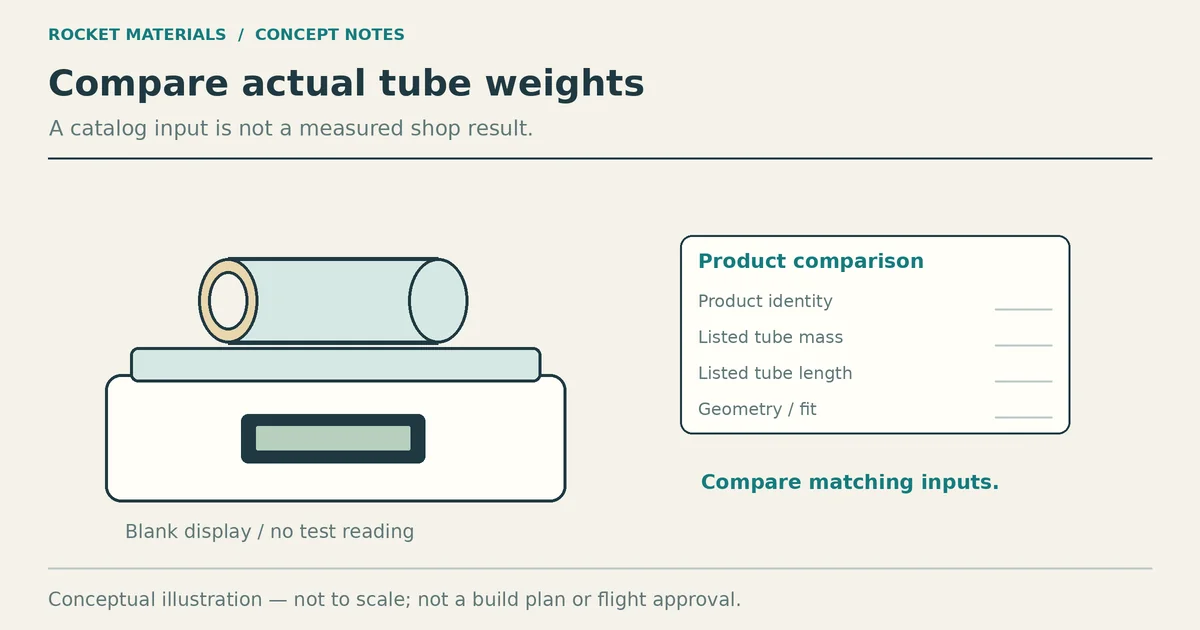
The original comparison used a single mass for a nominal sheet and a whole fin set without identifying the sheet, exact cut shape or finish. Those values are omitted here. For a useful comparison on your rocket:
- Trace the same fin outline on the candidate sheets. Record sheet thickness and any cutouts; do not compare a thick plywood blank with a thin balsa blank as if only the species changed.
- Cut a full set, then weigh each set on the same scale. Note whether the measurement includes sealer, paint or adhesive. For a kit repair, weigh the replacement against the supplied part if you still have it.
- Update the complete rocket’s mass and center of gravity with the intended motor and recovery gear. Check stability and flight performance using your kit instructions or a suitable simulation; do not assume the lighter option always reaches a particular altitude.
Apogee’s material guidance treats density, grain and ease of shaping as design trade-offs, not a universal motor-to-wood chart. For faster or larger scratch builds, flutter deserves its own check: Apogee’s flutter analysis uses fin geometry and material properties together with flight conditions, rather than a motor impulse letter alone.[3][6]
Decide by the design, not by motor class
Choose balsa if your kit calls for it, or if a lightweight fin is valuable and the fin planform, grain and attachment have been checked. It is convenient when you only have hand tools. If a large span, thin trailing edge or frequent rough recovery makes that choice doubtful, change the design or use a different stock after checking the entire rocket.[1][3]
Choose plywood when cross-grain construction serves a real need and you can account for the resulting mass and attachment loads. Match the fin stock and joint design to the intended flight; there is no blanket “plywood above D” rule, nor a blanket “balsa stops at C” rule. A stronger fin can move the failure point into its root or airframe.[2][6]
A hybrid or reinforced fin is possible, but it isn’t a free shortcut. Added layers change weight and stiffness, and a poor bond can peel or shift. If you need reinforcement, review the design and attachment together using the kit or component instructions; do not infer that a change in stock alone validates the joint.
Cutting, attachment and preflight checks
For balsa, support the sheet, use a sharp blade and make controlled passes rather than forcing a thick cut. Transfer the kit grain marking accurately. For plywood, use a tool appropriate to the sheet and keep hands clear of the cut; inspect edges for gaps or lifted veneers. Sanding or cutting either wood makes dust, so use suitable dust control and follow your tool’s instructions.
Dry-fit every fin before gluing. Check that the root meets the body where the plans specify, then use the adhesive and fillet method called for by the kit or materials supplier. Keep fins evenly spaced and aligned according to the plan. Do not use a glue fillet to hide a loose or damaged root joint.
Before launch, check each fin and its attachment for cracks, softness, delamination or movement. Confirm the final rocket’s stability, motor compatibility and recovery setup against the applicable instructions. NAR’s safety code requires lightweight nonmetal parts for model rocket fins and a suitable recovery system, and calls for a stability check when the safety of an untested rocket is uncertain.[4]
Common questions
Is balsa strong enough for a particular motor?
A motor letter alone cannot answer that. Start with the kit’s approved motor list and specified fin material. For a scratch build, consider the actual motor, expected speed, fin planform, grain, thickness, attachment and stability. If those checks are beyond your design process, use a proven kit design rather than assigning a motor limit to balsa.[3][6]
Should I replace damaged balsa fins with plywood?
Not without checking the full assembly. First look for the cause of the damage, including a hard landing or failed recovery. A plywood replacement may change the mass and center of gravity and can load the original fin joint differently. A like-for-like repair following the kit maker’s instructions is usually the clearer starting point.
Does plywood need grain alignment?
Its cross-laminated plies make orientation less one-directional than solid balsa, but plywood is not perfectly uniform in every direction. Look at the face grain, ply edges and the supplier’s specification for your sheet. For balsa, follow the kit grain mark or Apogee’s near-leading-edge guidance rather than a generic “vertical” rule.[2][3]
Which material is cheaper?
Compare the actual sheet size, thickness, shipping and usable fin yield from current supplier listings. The old per-fin price table assumed a perfect rectangular nesting layout and unverified prices, so it was removed. Tooling and wasted cuts also affect the real cost.
For a first build, use the fin stock specified in the kit. For a custom build, weigh the actual pieces and verify the design rather than trusting an appealing material label. Printed components also need their own material, joint and flight checks.
Sources
[1] https://www.wood-database.com/balsa/
> “Average Dried Weight:”
[2] https://www.apawood.org/engineered-wood-products/plywood-osb/plywood
> “Plywood is manufactured from thin layers of cross-laminated wood veneer bonded under heat and pressure to form a strong, stable structural panel.”
[3] https://www.apogeerockets.com/Advanced_Construction_videos/Rocketry_Video_403
> “The most common choice, particularly for fins, is balsa wood.”
[4] https://www.nar.org/ModelRocketSafetyCode
> “I will use only lightweight, non-metal parts for the nose, body, and fins of my rocket.”
[6] https://www.apogeerockets.com/education/downloads/Newsletter615.pdf
> “The main take-away from Martin’s analysis is that”